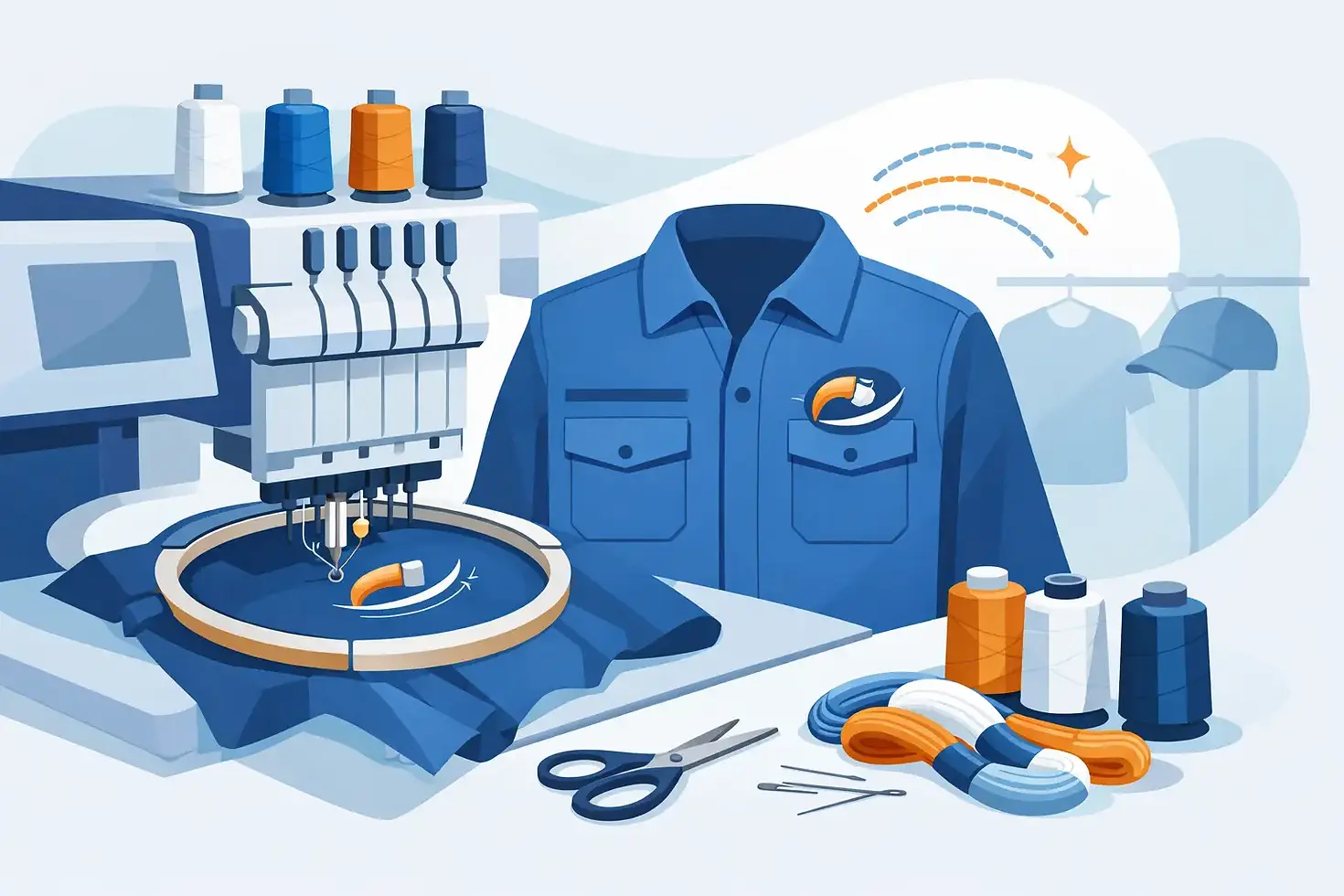
Custom Workwear Embroidery That Lasts
- Melbourne Uniforms
- 1 day ago
- 6 min read

A stitched logo on a faded polo sends the wrong message before your staff have said a word. That is why custom workwear embroidery is not just a branding extra - it is part of how your business presents itself on site, on the road and in front of customers.
For many organisations, embroidery is the safest choice when uniforms need to look consistent, hold up to regular washing and suit a wide mix of garments. It works across hi vis polos, jackets, hoodies, corporate shirts, caps and hospitality wear, and it tends to keep its shape better than many printed finishes over time. But the result depends on more than adding a logo file and pressing go. Garment choice, stitch density, logo size and placement all affect how the finished uniform looks and performs.
Why custom workwear embroidery suits business uniforms
Embroidery gives workwear a more permanent and premium finish than many other branding methods. For teams in trades, construction, healthcare, logistics, hospitality and corporate settings, that matters because uniforms are worn hard and washed often. A properly embroidered logo generally resists peeling, cracking and fading better than surface-applied decoration.
It also has a practical advantage for mixed uniform programs. If your staff wear polos in summer, jackets in winter and caps on site, embroidery can usually be applied across those categories with a consistent look. That helps businesses maintain a clear brand standard without managing several different decoration methods for every garment type.
There is also the issue of perception. Embroidered branding tends to look more established, particularly on business shirts, outerwear and premium workwear. If your team is customer-facing, enters client premises or represents your business on service calls, that finish can lift the overall impression without making the uniform feel overdone.
Where embroidery works best - and where it depends
Custom workwear embroidery is a strong option for many garments, but it is not automatically right for every job. Heavier fabrics such as polos, drill shirts, fleece, softshell jackets, hoodies and caps usually handle embroidery well because they can support the stitching without puckering. These garments also benefit from the textured, durable finish that embroidery provides.
Lighter fabrics can be a different story. Very thin shirts, stretch garments or delicate healthcare apparel may need more care in how the design is set up. A dense logo on a lightweight fabric can pull the material, affect drape or feel bulky against the body. In these cases, the right answer often depends on the logo itself, the garment fabric and where the branding will sit.
Large designs are another point where buyers need to think practically. Embroidery is excellent for left chest logos, sleeve details and cap fronts, but very large back designs can become heavy and expensive. If a logo has fine gradients, tiny text or highly detailed artwork, the design may also need to be simplified so it stitches cleanly. A good supplier will flag this early rather than forcing an unsuitable design onto the garment.
What affects the quality of embroidered workwear
The best embroidery jobs start long before the machine runs. Digitising is one of the most important steps. This is the process of converting a logo into a stitch file that tells the embroidery machine how to sew it. Poor digitising can make a clean logo look uneven, crowded or out of proportion, even if the garment itself is good quality.
Thread choice matters as well. Commercial embroidery threads are selected for durability and colourfastness, but matching brand colours still requires judgement. Some logos translate neatly into thread, while others need a close approximation because stitched thread reflects light differently from ink on a screen or printed paper.
Garment construction also affects the result. Seams, pockets, zips, mesh panels and stretch zones all influence placement and stitch performance. A logo may look ideal on a flat artwork proof but sit awkwardly once it is placed on an actual jacket chest or above a pocket. That is why experience with workwear ranges is important. Uniform branding is not only about the logo - it is about how that logo behaves on the specific garment your team wears.
Choosing the right garments for embroidery
Business buyers often start with the logo, but the smarter place to start is the job the garment needs to do. A warehouse team, a front-of-house hospitality crew and a corporate office all need different fabrics, fits and branding approaches.
For industrial and trade settings, durability comes first. Hi vis polos, heavy-duty shirts, fleeces, jackets and beanies are common embroidery candidates because they stand up to daily wear and provide enough structure for a strong stitched finish. For office and corporate uniforms, the focus may be cleaner styling and a more refined chest logo on shirts, knitwear or softshell outerwear.
Healthcare and hospitality businesses often need to balance presentation with comfort and wash frequency. Scrubs, chef jackets and service uniforms can be embroidered effectively, but logo size and placement usually need to stay neat and functional. In these settings, less is often more. A simple, well-positioned logo tends to perform better than large decorative branding.
When businesses source garments and decoration separately, problems can creep in. Fabric suitability gets missed, branding placement varies and reorders become harder to match. Working with one supplier that can handle both garment selection and in-house branding reduces that friction and makes quality control more straightforward.
Cost, volume and long-term value
Embroidery is not always the cheapest decoration method upfront, but cost should be assessed over the life of the uniform program. If garments are worn weekly, washed often and expected to last, a durable embroidered logo can represent better value than a cheaper option that degrades early.
Order size affects pricing as well. Setup costs such as digitising are spread more efficiently across larger runs, which is why bulk uniform orders often make the most commercial sense. Businesses fitting out multiple departments, new sites or seasonal teams should factor this in early rather than ordering in small, inconsistent batches.
It is also worth planning for reorders. Staff turnover, new starters and replacement garments are normal parts of uniform management. If the logo setup, thread colours and garment specifications are managed properly from the start, later orders are easier to repeat with confidence. That consistency saves time for operations teams and avoids the patchwork look that can happen when uniforms are sourced ad hoc.
Getting custom workwear embroidery right first time
A smooth embroidery project usually comes down to clear decisions made early. The logo file needs to be usable. The garment range needs to match the work environment. Sizes and quantities need to be confirmed with enough accuracy to avoid over-ordering or urgent top-ups. And branding placement needs to be agreed before production starts.
This is where many businesses benefit from a supplier that understands uniform purchasing, not just decoration. There is a difference between putting a logo on clothing and building a uniform program that works in practice. Procurement teams and business owners usually want fewer moving parts, predictable turnaround and garments that can be reordered without re-explaining the job each time.
At Melbourne Uniforms, that combined approach is a practical advantage. Businesses can source workwear, corporate apparel, hospitality clothing and branded garments in one place, with embroidery handled as part of the broader supply process. That simplifies quoting, reduces back-and-forth and makes it easier to keep presentation consistent across teams.
Common mistakes businesses can avoid
One of the most common issues is choosing embroidery purely on appearance without considering garment fabric. Another is making the logo too large or too detailed for the item. Both can lead to disappointing results, even when the original artwork looks strong.
There is also a tendency to treat all staff roles the same. In reality, a site supervisor, admin team member and delivery driver may all need branded uniforms, but not the same garments. A practical uniform program allows for role-based variation while keeping the embroidered brand identity consistent.
Finally, speed should not come at the expense of approval. Businesses under pressure to fit out staff quickly sometimes skip proper confirmation of colours, logo size or placement. That can be an expensive shortcut. A clear quote and approval process is usually the better path, especially for larger orders.
If you want custom workwear embroidery to do its job properly, think beyond the logo itself. The best result comes from matching the right branding method to the right garment, for the right team, with enough planning to make future orders easy. Done well, embroidery becomes one less thing to manage - and one more reason your staff look prepared, professional and consistent every day.

Comments